You can download about 19 free papers here. The papers are on physics. The papers feature The Static Nucleus Theory of the Face-Armored Cubic Lattice and a separate subject: Units of Measure. That includes space & time curvature scale drawings. Geometric concepts with current flows replace concepts featuring algebra and energy, for scientific progress. Conserving energy only has limited value in physics, like balancing a checkbook. You still need to earn the energy with finer details.
What if it’s true that human memory uses nuclear quantum phenomena? That kind of room-temperature precision can be researched in several materials. Maybe biologically active iodine has the quantum memories in its nuclear neutron spins. No chemical reaction occurs in the iodine atom to read or write a memory qubit. Cryogenic equipment could be eliminated from a quantum research apparatus. Some of these papers were offered to major journals. The papers were written from 2018 to 2026 by Alan Folmsbee, Master of Science Degree in Electrical Engineering.
Paper list: 1 iron, 2 chromium, 3 carbon, 4 light swaps magnetic poles GdFe, 5 femto-gears & nanotech, 6 neodymium vs. iron rings, 7 water bond angle arccosine(-1/4), 8 abstract units of measure, 9 formulas for my theories, 10 hysteresis in Fe, 11 nuclear measurement list and draft evaluation, 12 molecular shapes from proton lines, 13 electronegativity graph versus Z of foundation elements (there are 19 foundation elements like Fe and Hf), 14 sleep and memory theory of biological brain iodine, 15 electron motions through proton rings for biology, 16 “neutron-spin memory in warm iodine” paper implies prelife anti-entropy ease for clay. Paper #17 Pre-life using clay and iodine neutron memory. (I am using ideas of A. G. Cairns-Smith and others. I am including claims about a proposed memoglobin molecule that may someday be found in animals and that can be used in prebiotic theories and biomimicral inventions). #18 evidence, #19 Three Laws of Nuclear Shapes.
Paper #1 Ferromagnetism of Fe Nucleus, 2019, Journal of Nuclear Physics
Paper #2 Antiferromagnetism of Cr Nucleus, 2021, Journal of Nuclear Physics, a journal posted by one scientist in Florida.
Paper #3 Carbon Nuclear Structure poster session American Physical Society April, 2022 Meeting in New York City. The image of the poster is linked, here. I was in the poster session at Times Square, where I spoke loudly for two hours to a noisy throng. I wore a mask, but removed it for an APS photographer as I presented the new theory of matter on Broadway.
Paper #4 Integer Geometries Inside Magnetic Elements: Light reverses nuclear magnetic poles in 1 ps experiment by someone. 2022 theory paper by me.
Paper #5 Nanotech from nucleus, carbon, nitrogen, gears of flux in 2024
Paper #6 Neodymium Proton Rings Compared to Iron Rings released by September 15, 2024 for a conference at Technical University Darmstadt, Germany. This paper was submitted to IEEE Magnetics Letters and rejected. This does not include the convergence zone of paper #10 (Fig. 2 video, below).
Paper #7 Water Bond Angle from Oxygen Proton Lines, August 17, 2024
Paper#8 Abstract Units of Measure, a pdf file with 62 equations, including the source of G, Newton’s Universal Gravitational Constant, a graph with units of measure of spacetime curvature, the Atomic Scale Formula, and the quantum power formula for 2eV per second. The atomic scale formula uses alpha, the fine structure constant (1/137). This linked paper describes alpha as “the ratio of the strengths of the unit electromagnetic interaction and the unit gravitational interaction within atomic scale systems.”
Scientists use energy as mass or temperature in books and scholarly papers in exclusive journals. For example, 11,600 degrees is 1 eV electron volt of energy. Mass is measured as eV electron volts of energy. They are ashamed of grams, but energy is cool. So mass equals temperature, according to Old Science. Potential in chemistry is energy. Potential in physics is velocity squared, in an abstract sense. Temperature is a potential. Voltage is a potential.
Paper #9: List of Theories in Formulas.
This paper has the December 24 version of Figure 1: The curvature of time in the carbon nucleus and outside, relating to spacetime curvature. But the vertical scale will be replace as zero to ten. That 18 value for W will be removed. That is because the time emitted by each neutron and proton in the core only has small gaps to use as exits. The areas of nucleons divided by area of gaps is about 4.5 . That time density increase (W = 4) is beyond the “acceleration” of W=2. The second derivative of position is acceleration. The fourth derivative near a nucleus can be described as impact. The tenth time derivatives in a chain-rule can be called “binding”. One time density change derivative is like dt/dR . Ten is two times five, where 2 is the Order for acceleration and 5 is the area ratio for time to escape the core of the carbon atom.
Paper #10: Hysteresis from the interior of the iron nucleus

Figure 1: The curve has 24 steps as each electron theoretically passes through a tight Fe nucleus
Similar to my Fig. 1, there was a staircase magnetization curve published around 1961 in a Richard Feynman lecture, Figure 37-10
https://www.feynmanlectures.caltech.edu/II_37.html#Ch37-F10
R. Feynman wrote that the staircase on the magnetization curve was from domain boundaries changing. He wrote that audible clicks are heard by using an inductive pickup and audio amplifier. This phenomenon is called the Barkhausen effect (1919). In my theory, the staircase waveform is due to single electrons passing through the core of the iron nucleus to change a south pole to be north. Feynman’s jerky waveform is for millions of iron atoms, not the single atom in my Fig. 1, which I sketched before finding the Feynman lecture figure .
Video of ferromagnetic geometry
Fig. 2 is a simplified iron nucleus with internal flux nexus. White protons make 24 lines of yellow flux, each from a proton to an electron. The model is inaccurate, as the protons are moving. Instead, imagine the revolving white balls represent proton current, not proton motion. Superconducting proton current flows in the rings of magnetized iron. That is called the “loyalty current”. Each electron shares loyalty with only one proton, temporarily. In theory. ACF November 25, 2025.
Please write algebra to describe this nuclear functionality. Conversely, consider the work with algebra. Start without the geometric model and use algebra of energy conservation to make the theory of ferromagnetism, as I defined. From that algebra, produce the geometric model in the video. I expect that is impossible, because energy has nothing to do with the ferromagnetic property. Ferromagnetism is all about currents in a geometric shape, not energy in algebra.
See Theory Highlights for more about coercivity and hysteresis with video 1 and 2.
Hysteresis Notes
Gadolinium and neodymium have several protons inside the central cubes of their nuclei. Iron has none that are not on the surface of the nucleus. I propose that the coercivity improvement due to Nd is caused by those core protons, constraining the flux as some electrons pass through the nucleus during magnetization reversal. Those core protons change the hysteresis curve of a NdFeB bar magnet.

See the Highlights page for coercivity figures of Nd and Fe with no neutrons.
The following is mostly from Ref. 1:
During 1916, the chemist Gilbert Newton Lewis was so intent on having electrons pair in spite of the repulsion that exists between them, he felt compelled to state: “…a study of the mathematical theory of the electrons leads, I believe, irresistibly to the conclusion that Coulomb’s law of inverse squares must fail at small distances.” That relates to the hysteresis paper. Lewis wrote in the first issue of the Journal of Chemical Physics, which appeared in 1933, where he states: “There can be no question that in the Schrödinger equation we very nearly have the mathematical foundation for the solution of the whole problem of atomic and molecular structure ….” That is only if the nucleus and protons are simplified into something to be ignored, and they guessed that a nuclear shape is a sphere or lumped functional point for algebra.
Ref. 0 https://onlinelibrary.wiley.com/doi/10.1002/jcc.20528
Paper #11: Atomic Magnetic Measurement Review
January 31, 2025
Paper #12: Molecular Shapes from Proton Lines
Paper #13 Electronegativity versus Z for Nuclear Foundation Elements

Figure 2a: for all A mass number of elements, average binding energy per nucleon. Foundation elements are related to changes in the curve slope. Fig. 2a was sketched from Encyclopædia Britannica on nuclear binding energy, the second graph.
Slopes of Binding Energy Graphs
Hydrodynamic concepts are used to imagine a fluid that drains into each nucleon at a constant rate. Hydrogen has a low binding energy for an added neutron because its surface shape is non-porous. Argon’s nucleus is porous, so the fluid is constrained to flow in narrow gaps between nucleons. The pressure difference from internal places compared to the outside is evaluated. Each nucleon added to argon clogs a gap, decreasing the absolute pressure in the core, relative to outer space. Many additional nucleons on argon foundation will have a higher binding energy than the average binding energy.
Light foundation elements are porous and heavy ones are smoother
In Fig. 2a light elements show a positive slope. A negative slow begins at Fe because it is smooth. Fe will have a nucleon added onto an HCP lattice! Its binding energy will be less than the averages of the binding energies of the foundation element nucleons have. The slope is negative after Fe in the graph. The cube-2 core of light elements produces porous shapes. The cube-3 core of heavy elements allows smooth shapes to be common. The hexagonal close pack HCP is smooth compared to the gaps in cubes. See the Rules from the site map. November 19, 2025.
$$$$$$$$$$$$$$$$$$$$$$$$$$$$$$$$$$$$$$$$$$
Paper #14 “Brain Physics of Sleep and Memory”
Iodine was used in ancient cyanobacteria in a reference from Susan J. Crockford (1999). I-127 is the heaviest element in biology. Heavy elements have wonderful properties. In theory, the proton rings and cubic lattice of core nucleons provide a field environment that is unlike up here. Small confined spaces host flux lines from several proton-electron pairs. Like iron’s confluence zone in paper #10.
Paper #15 Electron motions through proton rings for biology
eFlows-128 was the first version from July 30, 2025
Paper #16: Neutron-spin memory in warm iodine
The Sn-120 experiments use signalling that could be interpreted to be like iron’s sequence. Delayed RF bursts and phase inversions may indicate that correspondence in a reference of H. K. C. Beukers, C. Waas, M. Pasini, H. B. van Ommen, Z. Ademi, M. Iuliano, N. Codreanu, J. M. Brevoord, T. Turan, T. H. Taminiau & R. Hanson. https://journals.aps.org/prx/pdf/10.1103/PhysRevX.15.021011
That 19 page paper is similar to the 130 page Beukers PhD. dissertation at Delft University of Technology. Three materials used quantum values at cryogenic temperatures:
- Nitrogen vacancy NV electron spin in diamond, read optically
- Carbon-13 nuclear spin in diamond, added Qubits near NV
- Tin vacancy SnV electron spin is resilient against noise on surface of diamond
September 10, 2025
Paper #17: Pre-life using clay and iodine neutron memory
Alexander Graham Cairns-Smith, organic chemist and molecular biologist at the University of Glasgow, lived from 1931 until 2016. I read his little book decades ago: “Seven Clues to the Origins of Life”. This paper 17 illustrates an invention that is claimed using Fig. 3 of the memoglobin design attempt. I propose that today’s human memory has the same physics as did pre-biotic reproduction. Electrons enter the iodine nucleus and use neutron spins for memory. The spin measurement uses a differential quantum amplifier molecule, with alpha and beta parts, like hemoglobin. It is named memoglobin. Room temperature operation of a quantum amplifier needs the differential amplifier with an input and the second input is applied after passing though an I-127 nucleus. The clay is like a reactor with beakers, pipettes, feedback tubes, gravity feed, and a layered pipeline of functions for massive production. After memoglobin reproduces itself a billion times, mutations make people.
Paper #18: Proof of a Matter Theory
based on https://pyramidalcube.blogspot.com/p/evidence.html
November 24, 2025
$$$$$$$$$$$$$$$$$$$$$$$$$$$$$$$$$$$$$$$$$$$$$$$$
Paper #19: Three Laws of Nuclear Shapes
$$$$$$$$$$$$$$$$$$$$$$$$$$$$$$$$$$$$$$$$$$$$$$$$
Discussion of Paper #11
Figures for paper 11 follow.

Figure 3: Mössbauer spectroscopy images for sextet of velocities from Fe-57. Not precise, this is to illustrate what a sextet is. Only the iron nucleus has the sextet of this kind. Other elements do not show 6 symmetrically around 0mm/second. I call positive speeds blue shifted. The red shifts in Fig. 4 correspond to the negative speeds in Fig. 3.

Figure 4: sextet of velocities may be due to six line segments in a proton ring. The 22o undulation angle is defined as the maximum difference from a planar ring (not shown).

Figure 5: Iron has triangular allocation of protons, in 6 line segments for sextet in Mössbauer spectroscopy
Calculation of proton ring current (attempt without plausibility)
A calculation is attempted, next. Imagine that the recoil velocity is 1mm per second and that is somehow related to the ring current in iron. That can be explained with plausibility essays (not shown yet).
The proton ring current is calculated to be about 120nanoAmp from the above figures. The proton ring current is a superconducting loyalty current. Each proton is loyal to one electron, temporarily, in theory.
i = Q/T
T is period for ring current to circulate once, Q is charge of 12 protons
T = circumference of ring / ( 1mm/second)
circumference for 12 protons is 16.5fm
T = 1.65 x 10⁻¹¹ seconds
i = Q/T = 12 x 1.6*10-19 Coulombs / 1.6 x 10⁻¹¹ seconds = 120nA
Mössbauer recoil (Fig. 2.13 in [1]), 12 protons in ring of circumference 24*0.85fm = 12 proton diameter. Since the proton ring is much smaller than 1mm, the current must go around in a circle many times in the 1 second Mössbauer test. It is the motion in the ring that allows the current to be calculated as Coulombs per second.
From other measurements, a 50 Tesla B-field was measured near an iron nucleus. That is from a hyperfine structure phenomenon. In [1], here is a quote from page 147, “…magnetic hyperfine field (originating from the interaction between the magnetic field at the nucleus and the nuclear magnetic dipole moment…”.
Next, calculate magnetic hyperfine B-field from the 120nA ring current to see if it is about 50 Tesla near the nucleus. B is Maxwell’s magnetic flux density. Importantly, the B-field is Webers per square meter. Therefore, the field is expected to be very strong close to the small area in front of a nucleus.
μ0 = 1.26 x 10⁻⁶ Henry/meter permeability of free space
Calculate the magnetic field intensity H using Amps per meter length of coil
H = I/r where I is 120nA and r is proton radius 0.85fm length of electromagnet
H = 1.4 x 10⁸ Amp/meter magnetic field intensity
Henry = Weber/Amp
B = μ0H
B = (1.26 x 10⁻⁶ Henry/meter) x 1.4 x 10⁸ A/meter = 177 Weber/ square meter
B = 177 Weber / square meter = 177 Tesla magnetic flux density “at the nucleus”.
The B-field spreads out as a cone of 68o. See Fig. 2 video for the angles that the flux take as they depart the nexus inside the nucleus. The B field depends on where it is measured. Keep in mind that I am not convinced of the reasonableness of this first draft calculation. A plausibility essay is planned to justify the 120nA proton ring current based on 1mm/second recoil from a gamma ray. This may involve the undulating shape of the ring. Alternatively, [3] describes how the internal magnetic field for a nucleus (100 Tesla) involves the angular momentum of the nucleus interacting with unpaired electrons near the nucleus. A gamma ray would usually miss the center of a nucleus and increase its angular momentum.
End of notes for paper 11. April 20, 2025.
—————- —————– —————–
Philosophies from 1893
A reference paper [2] from the year 1893 was written by J. A. Ewing. His full name was Professor Sir James Alfred Ewing (1855-1935) Professor of Mechanism and Applied Mechanics, 1890-1903. The title is:
XIII. Contributions to the molecular theory of induced magnetism
https://royalsocietypublishing.org/doi/pdf/10.1098/rspl.1890.0043
Ewing discusses magnets, hysteresis, and stress that makes an iron bar magnet longer and affects the magnetization.
________________________________________________
Decisions Resulting in the Theory
The following 14 research decisions are listed in the paper above, on neodymium.
The Static Nucleus Theory of the Face-Armored Cubic
Lattice was produced during May, 2017 in a sequence of
fourteen research decisions.
First, I decided to try to make progress in physics by announcing a law or shape from
nature.
Second, nuclear shapes needed to be proposed, to
fill the blank pages of the books on chemical elements.
Third, Fe was chosen as the first element to be evaluated
because its ferromagnetic property is so easy to measure
and magnetism has been thoroughly studied by past
scientists.
Fourth, a static nucleus theory was chosen
because other researchers had tried using many dynamic
nuclear ideas. Spherical nucleons were chosen to be stacked
to have the Z and A values according to standard tables for
chemical elements (atomic number and mass number).
Fifth, crystallographic arrangements would be attempted
with cubic, random, or hexagonal close-pack (HCP)
arrangements of spherical nucleons for nuclei.
Sixth, experiments were done using a random collection of 26
protons and 31 neutron beads. That showed that protons
must touch protons because there are not enough neutrons
to isolate them.
Seventh decision: protons can make lines
of multiple protons, while avoiding making branched lines.
Eighth, the core of Fe was modeled using a cubic stacking of
proton and neutron spheres (Fig. 2 and 3). The six faces of
the cube were planned to be covered by piles of nucleons.
Ninth, the cubic core would stack a 3x3x3 lattice of nucleons
because Fe-57 would get 27 nucleons in the core. (8 in the
core seemed too small and 64 in the core, too large).
Tenth, simple arithmetic revealed how plausible it is to use 6 piles
of protons and neutrons (nucleons) to cover the 6 faces of
the cube. The mass number was calculated to be precisely
appropriate, using the cube and six pyramids:
A = 57 = 27 + 6(N)
where N is 5 nucleons to cover each face with a
pyramidal stack.
Eleventh, the integer results from that
calculation gave me hope that this is an excellent candidate
structure for the Fe nucleus. So, I continued the research.
The atomic number was calculated, and the answer fit
together like a key in a lock.
Z = 26 = 8 + 6(3)
Twelfth, symmetry and electrostatic repulsion were
used for allocating protons in the cube. The core protons are
at the 8 corners of the cube.
Thirteenth, the maximum
distance from a neutron to a proton is one neutron
diameter. That ensures that neutrons do not decay quickly.
Protons feed neutrons.
Fourteenth Decision, 19 foundation elements simply have
pyramids on six faces of the cube. 90 incremental elements
add nucleons to the surfaces of foundations.

Figure 6: Poster Session in Darmstadt, Germany on September 17, 2024. Technical University Darmstadt cooperated with the Institute of Electrical and Electronics Engineers at a conference with 109 attendees. From Japan, was the co-inventor of the neodymium-iron-boron magnet. He is Masato Sagawa. Fig. 6 poster was for the IEEE Magnetic Frontiers 2024: Magnetic Materials and Motors for Green Energy Application, with Technical University of Darmstadt partners. Black neutrons and white proton beads. Color codes given below for the periodic table.
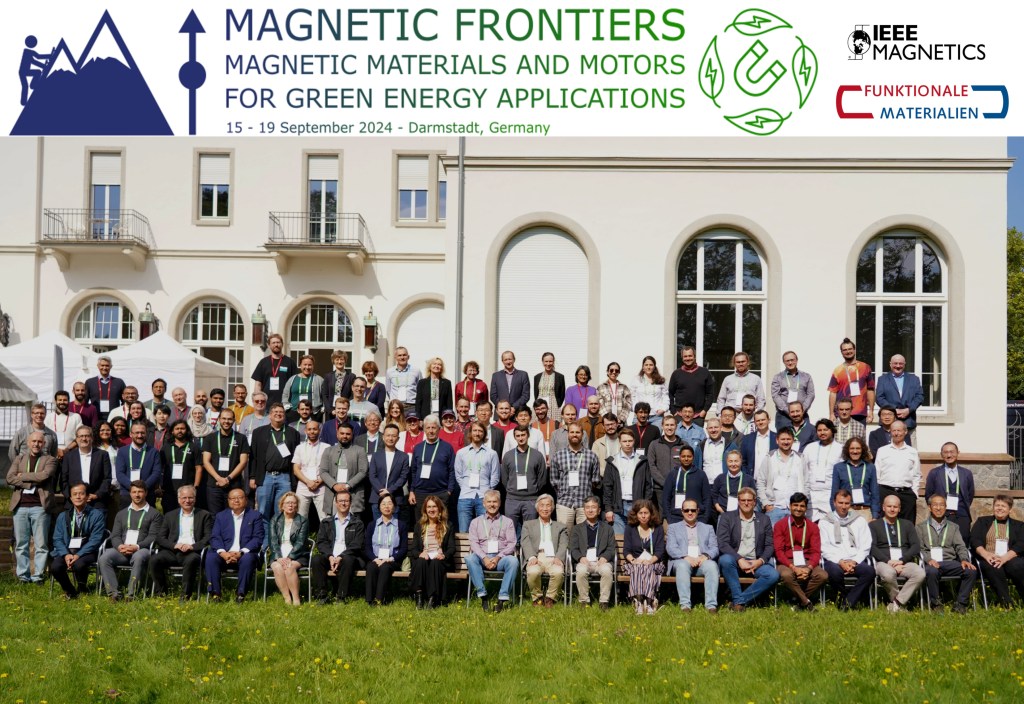
Figure 6b: Masato Sagawa is in the center chair under an arch.
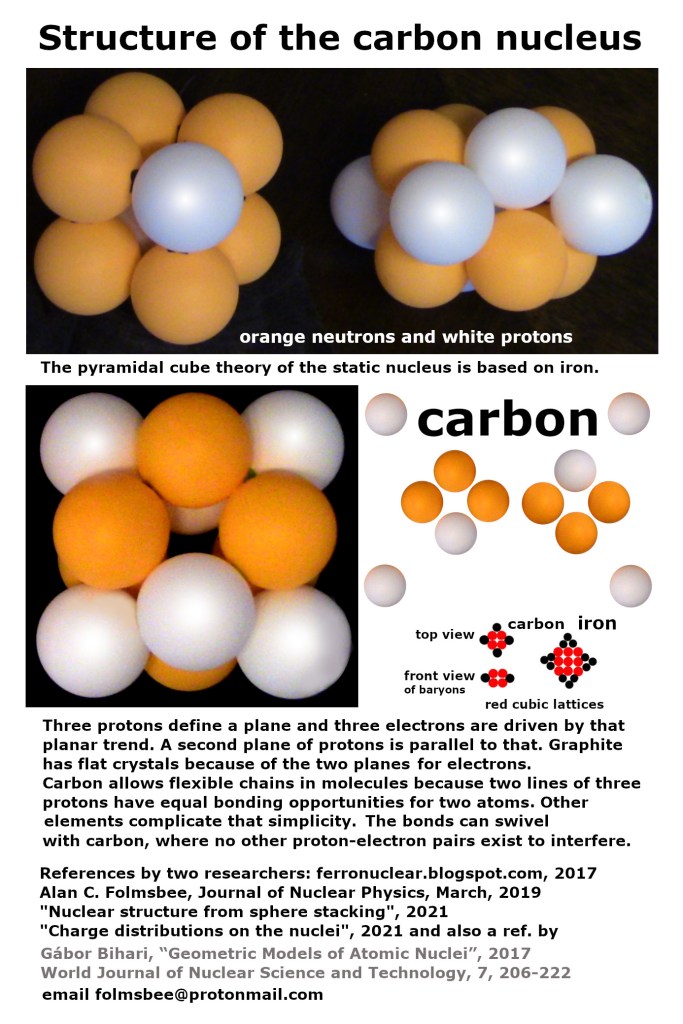
Figure 7: Poster from the American Physical Society April 2022 Meeting in New York City.
I presented the C paper on Broadway. The hotel was the Marriott Marquise at Times Square. Orange neutrons and white protons. The small diagrams use red circles for cubic stacking of neutrons and protons. The small black circles are for pyramids of protons and neutrons that cover each face of the cube, as used schematically in a periodic table.
Paper #1 and Paper #2 were submitted for publication at all of the most famous journals. My websites and speeches are better for communications than journals. Few people care about these details of matter, and fewer are in a position to profit from them. Those few thousand scientists, who are in positions where they could make products based on my theories, are very busy people already. Most of them do not have time to learn a new theory, so they teach the old theories.
Random and Hexagonal Candidate Nuclei

Figure 8: Iron-57 next to random 26 white and 31 black beads, 2024
The random bead experiments taught me that protons commonly touch protons in a test with 26 white and 31 black beads. Stable elements can have protons that did not get repelled from each other. There are not enough neutrons to isolate all of the protons. Since two can touch, so can three. Lines can be made by protons, especially if there is a force or trend pushing protons into lines.
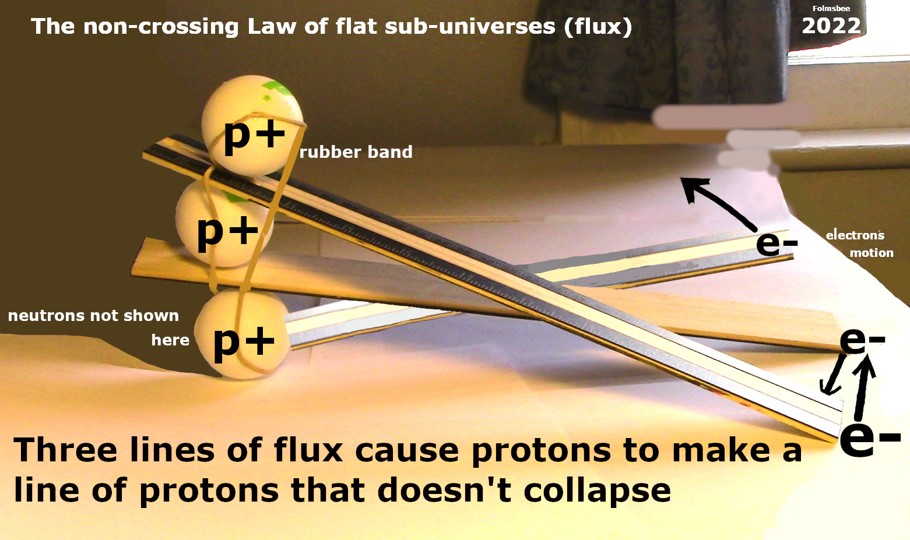
Figure 9: electrons force protons into line in The Sun or in a star
In Fig. 9 the rulers represent the wavefunction (flux) that connects a proton to an electron. The flat shape of the ruler helps emphasize that wavefunctions have two space-like dimensions and a time-like dimension going the other way. It is like a conveyor belt. Random motions of electrons make the rulers slide over each other and this keeps the orientation the same: the protons stack up with the rulers stacking up. The protons are attracted to each other by the strong nuclear force, represented by rubber bands. The three protons do not collapse together because the wavefunction is polarized. The net effect is that at a close range, Coulomb repulsion is not isotropic. Certain directions allow easy movement, so protons make lines of protons.

Figure 10: Hexagonal sphere stacking layer planning, 2024
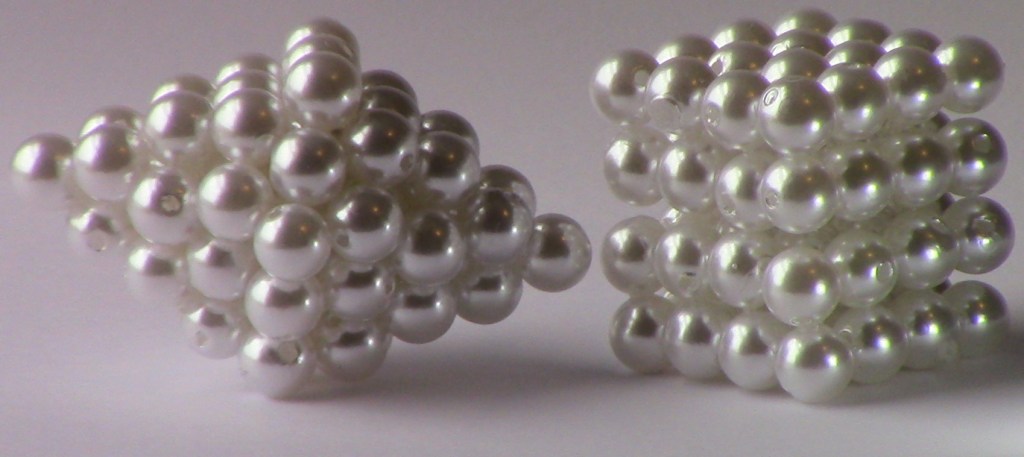
Figure 11: Hexagonal core candidate with 65 beads, cube with 64 beads as a candidate for nuclear core. Neutrons are gray, protons are gray.
The hex core of a candidate nucleus is bad because the outer surface has gaps as big as for a cubic lattice. The cubic core is good because the outer surface of the nucleus has a hexagonal close-pack arrangement. That has small gaps between nucleons (protons and neutrons). The small gaps help survival of a nucleus for billions of years. Silicon is all covered with HCP, so it has a good survival trait. The abundance of silicon may be helped by that smooth surface of the nucleus.
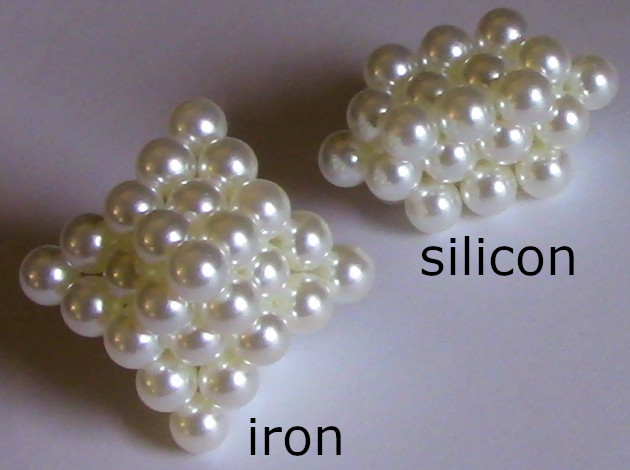
Figure 12: Fe and Si hexagonal close-pack surfaces for survival and abundance both protons and neutrons are gray for clarity of shape
February 17, 2025

Figure 13: small elements have cubic cores and can be exposed as hexagonally endowed. That armors the gaps in the cube, enhancing invulnerability to last for eons. May 23, 2025 Alan Folmsbee
[1] “Mössbauer Spectroscopy” by Garcia, Wang and Zhang editors, Wiley ISBN 978-3-527-34691-2
[2] Essay by Prof. J. A. Ewing from 132 years ago https://royalsocietypublishing.org/doi/pdf/10.1098/rspl.1890.0043
[3] “Fundamentals of Molecular Spectroscopy” by Prabal kumar Mallick, page 428 has “100 Tesla”, published by Springer ISBN 978-981-99-0790-8
 Nuclear Theory Data