All 118 chemical elements are described in this nuclear data file link. The button below links to the data. The file gives the xyz coordinates of each proton and neutron. There are 17,000 protons and neutrons listed in that text file of coordinates. Rev. O was approved on 6/19/25. The file name is nuclei_118_O.txt . Visual verification was done from hydrogen to zinc. The other elements are defined in the .xyz file format also, but some of them did not finish inspection with Blender. The file size is small: 229KB .
Perl program that calculated some coordinates
The file name is for europium, in a perl software item link that you can download from my googleDrive.
19 foundation elements divide up the 118 elements into 19 “classes.” A color is used by each class in the following figure to highlight one foundation element and some incremental elements that are based on the foundation. The foundation element is the left-most nuclear shape in each color block, starting at carbon.
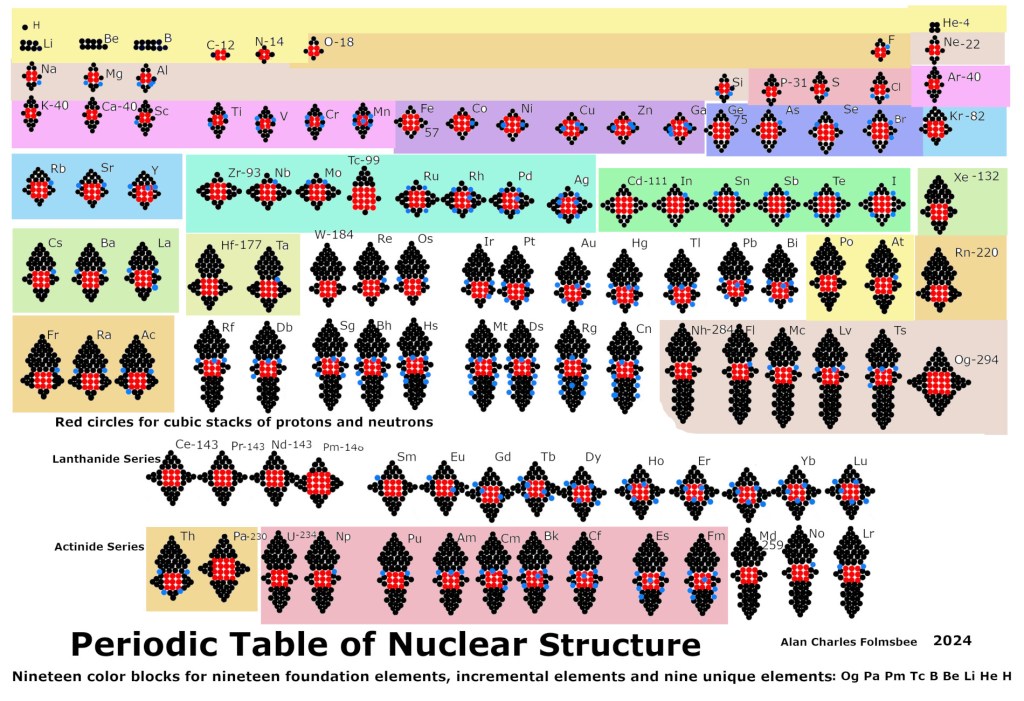
The theory is called “The Static Nucleus Theory of the Face-Armored Cubic Lattice”. It is based on iron, as these papers describe. Below are links to the serial eBooks that led to the nuclear data being tabulated. Charge distributions on the nuclei is the name of the series of 19 small eBooks and a hardcover edition. The elements built on 19 foundation elements are incremental elements and they are also described in the books. Using the Static Nucleus Theory of the Face-Armored Cubic Lattice, a foundation element is one which has a cubic stack of protons and neutrons in the core, with six pyramids of protons and neutrons armoring each face of the cube. Incremental elements are built using a foundation element, and then adding more protons and neutrons on the surface. Protons commonly form lines of protons on most elements. Symmetry is used to place the added baryons (protons and neutrons).
Carbon has a .xyz file for the baryon coordinates. The blue proton uses a symbol “Ar” and each yellow neutron uses a symbol “S” to comply with Blender atomic utilities that I already activated from my Blender menu. These notes could help:
Blender edit, preferences, add-ons, “Import-Export: Atomic Blender PDB/XYZ”
That will activate the Import Menu to show the .xyz file format choice.
The file is named carbonF4.xyz with only these lines:
12
carbon
Ar -1 1 1
S 1 1 1
S -1 -1 1
S 1 -1 1
S -1 1 -1
S 1 1 -1
S -1 -1 -1
Ar 1 -1 -1
Ar -2.41 0 0
Ar 0 2.41 0
Ar 2.41 0 0
Ar 0 -2.41 0
Blender accepts that carbon file using the import menu.
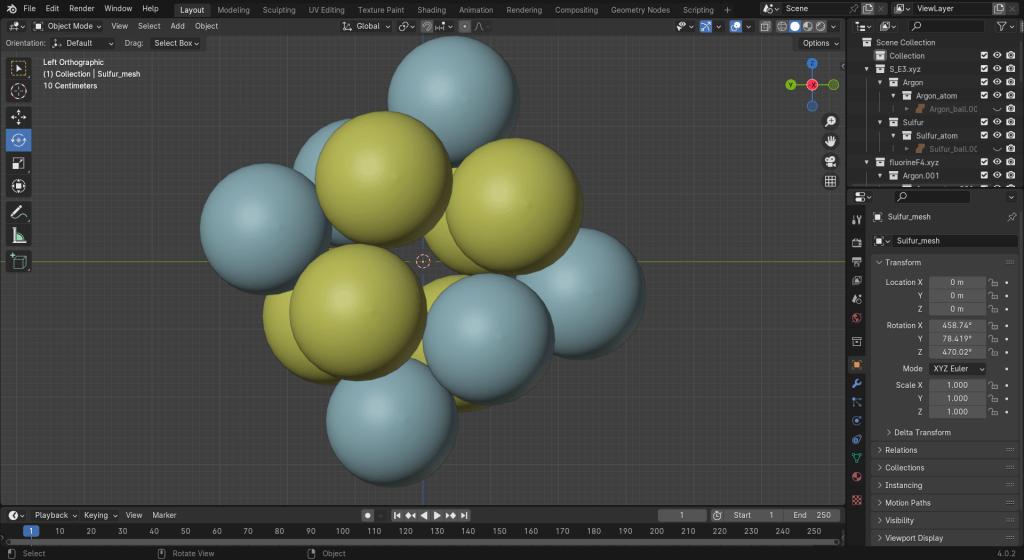
Carbon-12 isotope with blue protons and yellow neutrons
That type of nuclear data is ready for all elements, in the book series with 19 volumes: Charge distributions on the nuclei . On Amazon, eBooks and a hardcover edition are available. The 19 volumes each cost as little as $3. The baryon coordinates are given in the eBooks in Tables using one format, but the coordinates were then changed to use the .xyz file format. That single file is at the top of this page as a link. To use Blender for carbon, the big file of all elements was used to extract just the carbon lines. That was named carbonF4.xyz and it was imported into the Blender menu. The output file can be named carbonF4.blend from the software. Here is a link to all available Blender files.
Link to Theory Highlights
Goals for these durable theories are linked here.
=================================================
List of elements and 19 small eBooks describing them
Class numbers from 1 to 19 have increasing atomic numbers Z from 1 to 118. The foundation elements are highlighted. Look at the book covers.
1 hydrogen, helium, lithium, beryllium, boron, carbon, nitrogen. Book link. $22.33
2 oxygen, fluorine. Book link. $11.22
3 neon, sodium, magnesium, aluminum, silicon. Book link. $6.77
4 phosphorus, sulfur, chlorine. Book link. $3.44
5 argon, potassium, calcium, titanium, vanadium, chromium, manganese. Book link. $6.77
6 iron, cobalt, nickel, copper, zinc, gallium. Book link. $6.77
7 germanium, arsenic, selenium, bromine. Book link. $6.77
8 krypton, rubidium, strontium, yttrium. Book link. $6.77
9 zirconium, niobium, technetium, ruthenium, rhodium, palladium, silver. Book link. $6.77
10 cadmium, indium, tin, antimony, tellurium, iodine. Book link. $6.77
11 xenon, cesium, barium, lanthanum. Book link. $6.77
12 cerium, praseodymium, neodymium, promethium, samarium, europium, gadolinium, terbium, dysprosium, holmium, erbium, thulim, ytterbium, lutetium. Book link. $6.77 The Lanthanide Series.
13 hafnium, tantalum. Book link. $11.22
14 tungsten, rhenium, osmium, iridium, platinum, gold, mercury, thallium, lead, bismuth. Book link. $11.22
15 polonium, astatine. Book link. $11.22
16 radon, francium, radium, actinium, thorium, protactinium. Book link. $22.33
17 uranium, plutonium, americium, curium, berkelium, californium, einsteinium, fermium. Book link. $33.44
18 mendelevium, nobelium, lawrencium, rutherfordium, dubnium, seaborgium, bohrium, hassium, meitnerium, darmstadtium, roentgenium, copernicium. Book link. $33.44
19 nihonium, flerovium, moscovium, livermorium, tennessine, oganesson. Book link. $33.44
Each of the 19 classes of elements has web pages for: coordinates of baryons, Blender 3D models, images of mock-ups, and a link to a book about each class of nuclei. In the future, a virtual reality utility will be put here.
___________________________________________________________
Here are book covers for each class of chemical elements. Protons are white and neutrons are dark in the mock-ups of nuclei.
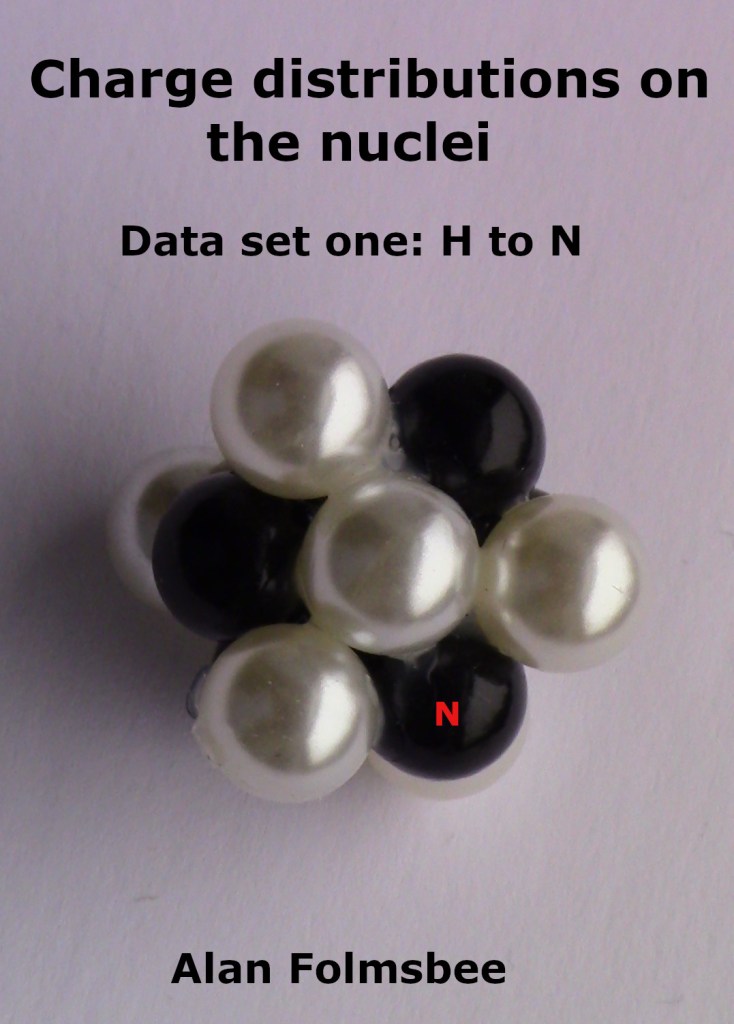
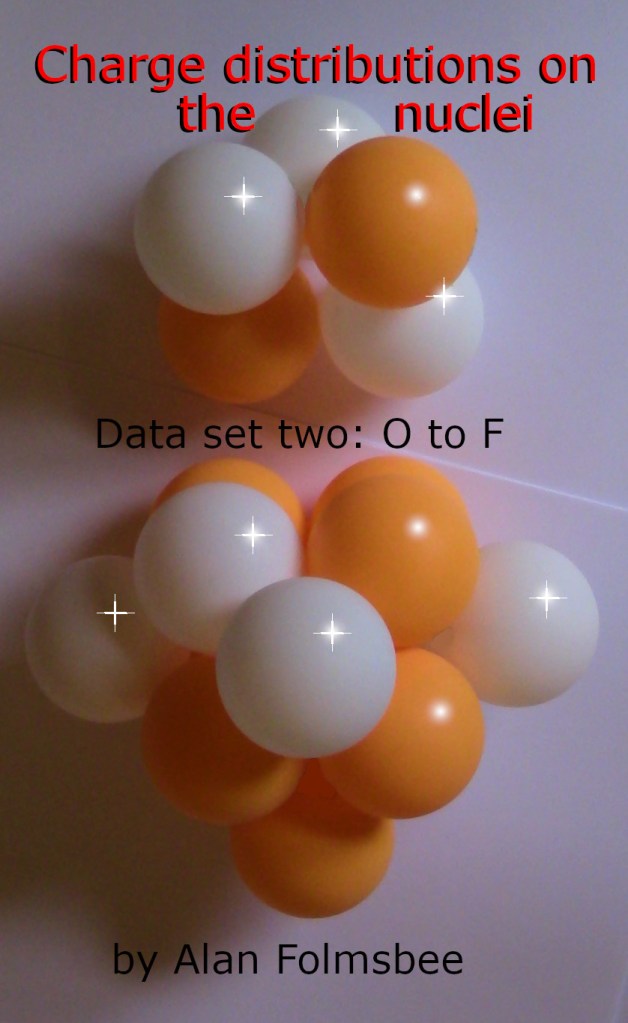
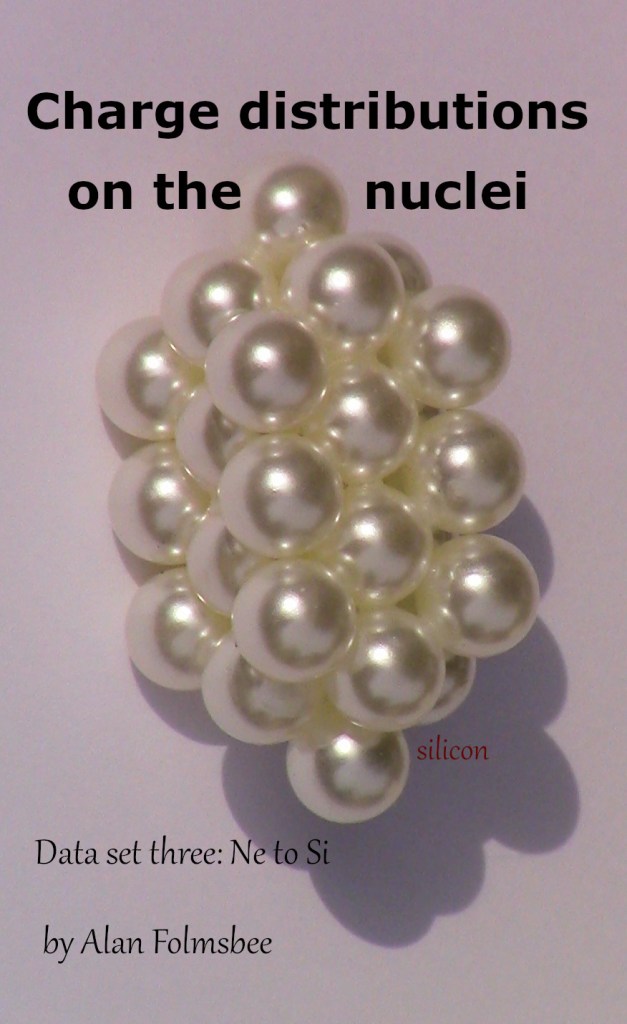
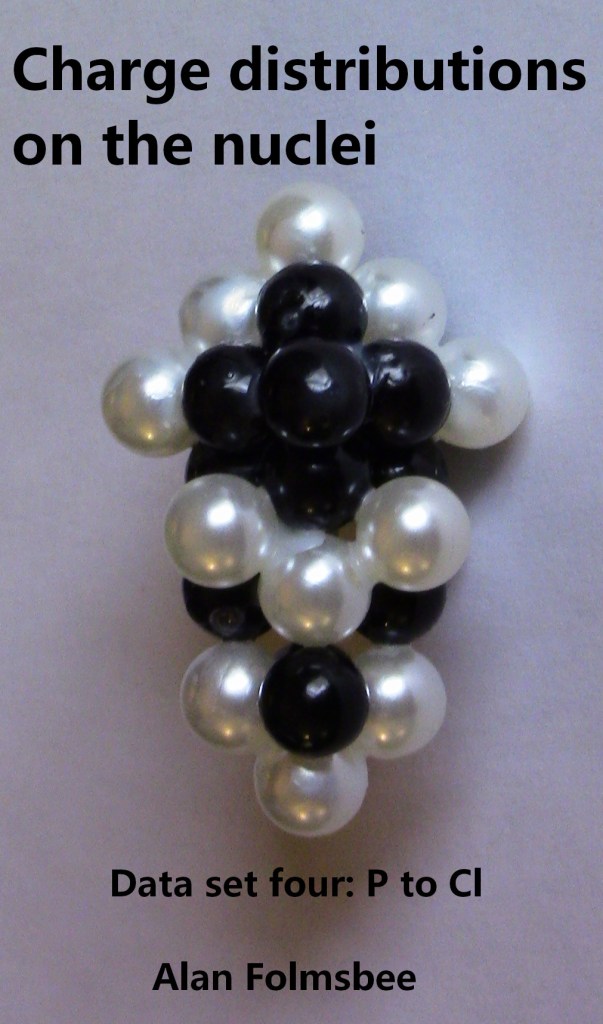
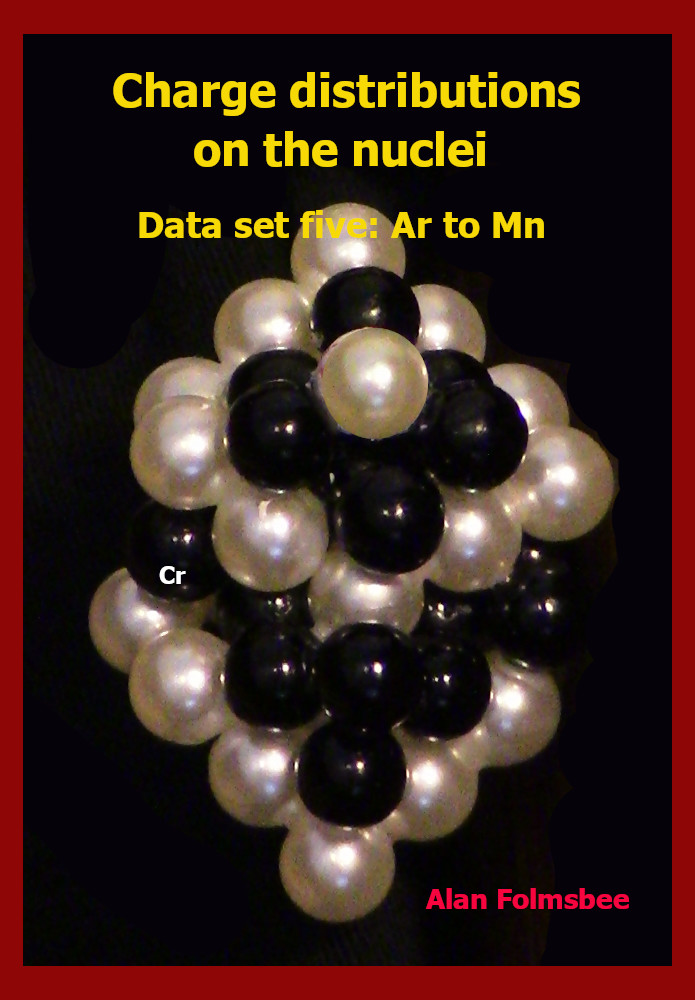
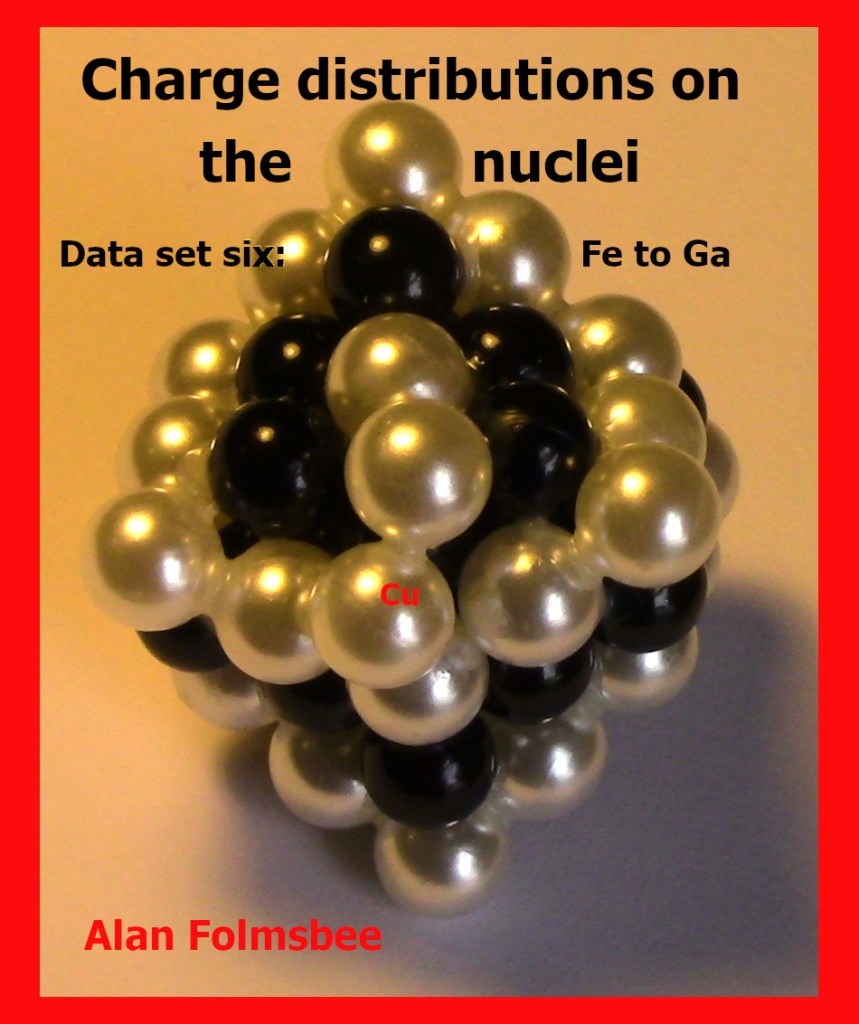
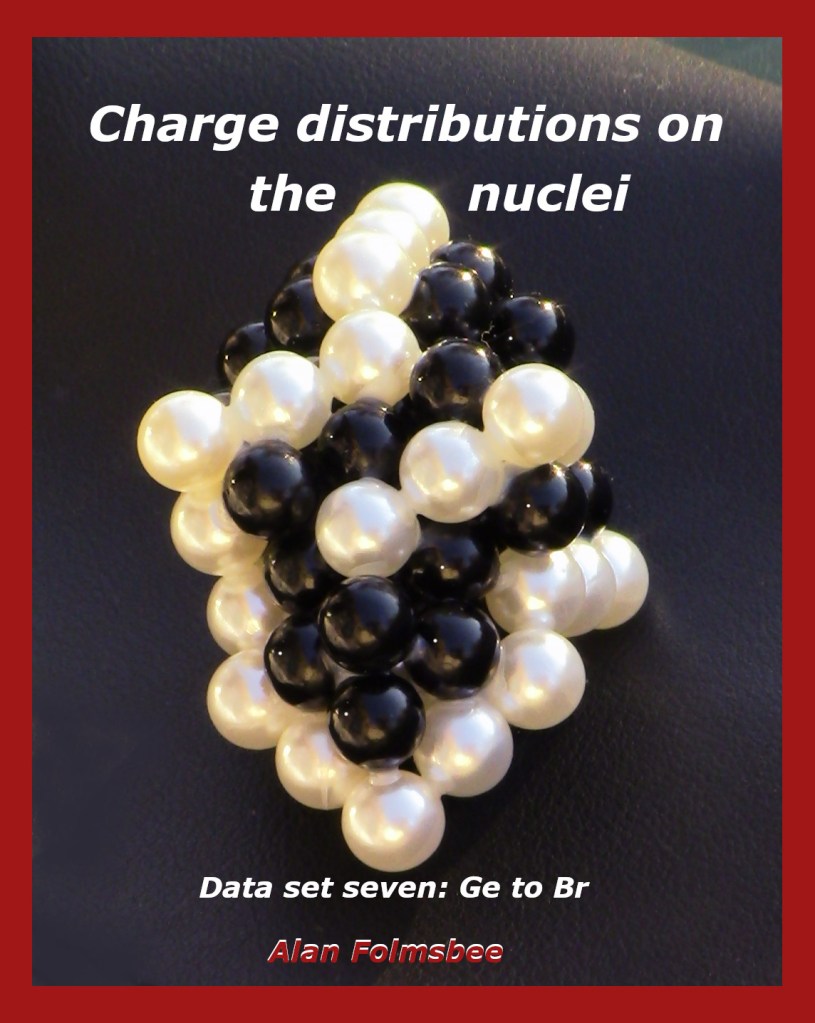
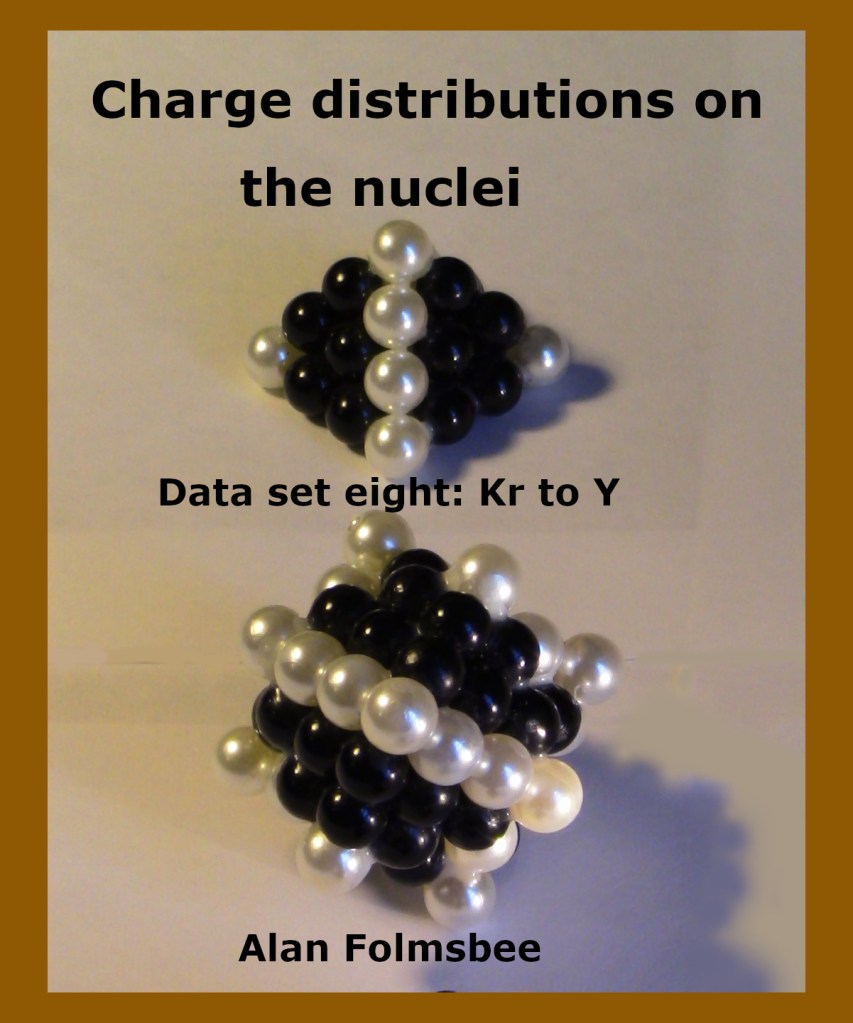
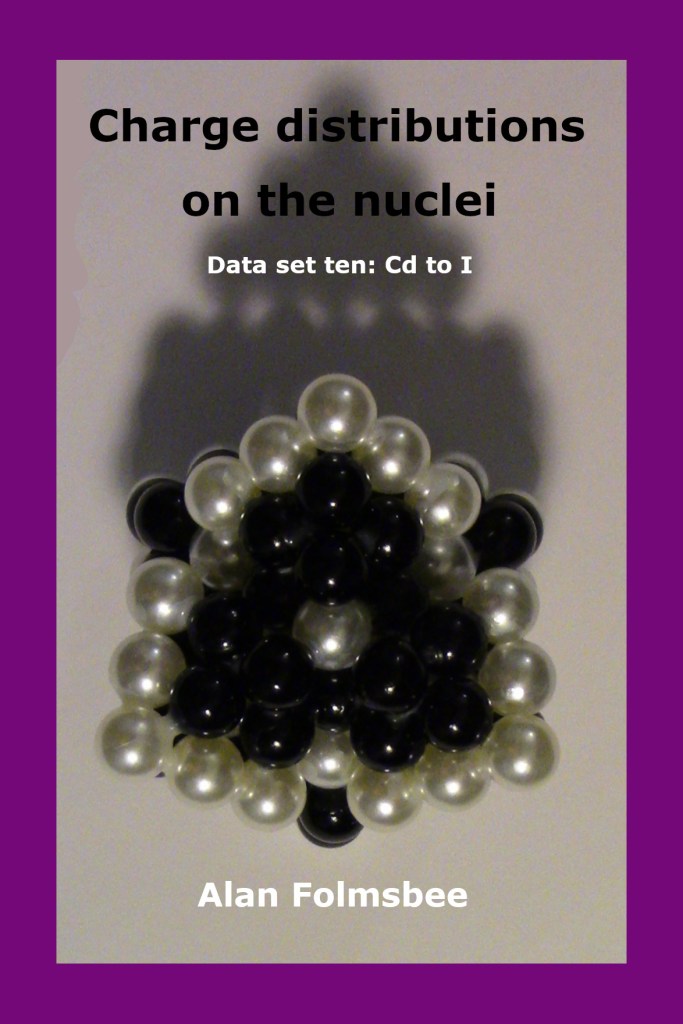
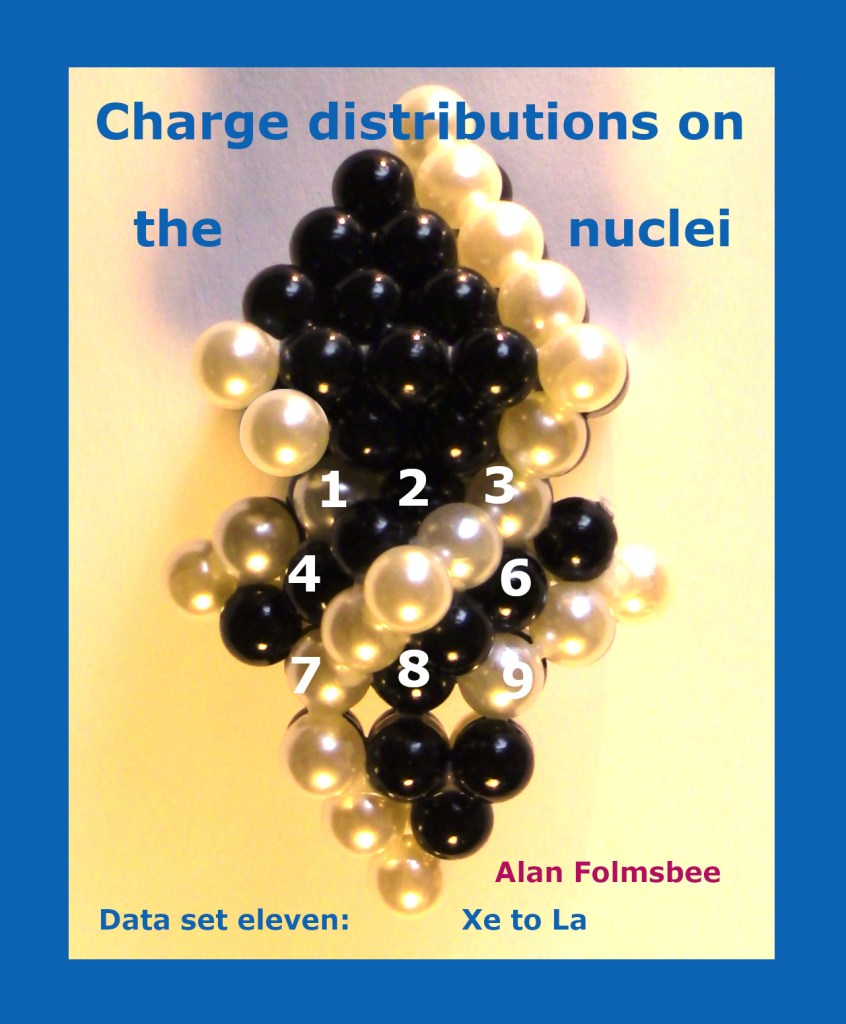
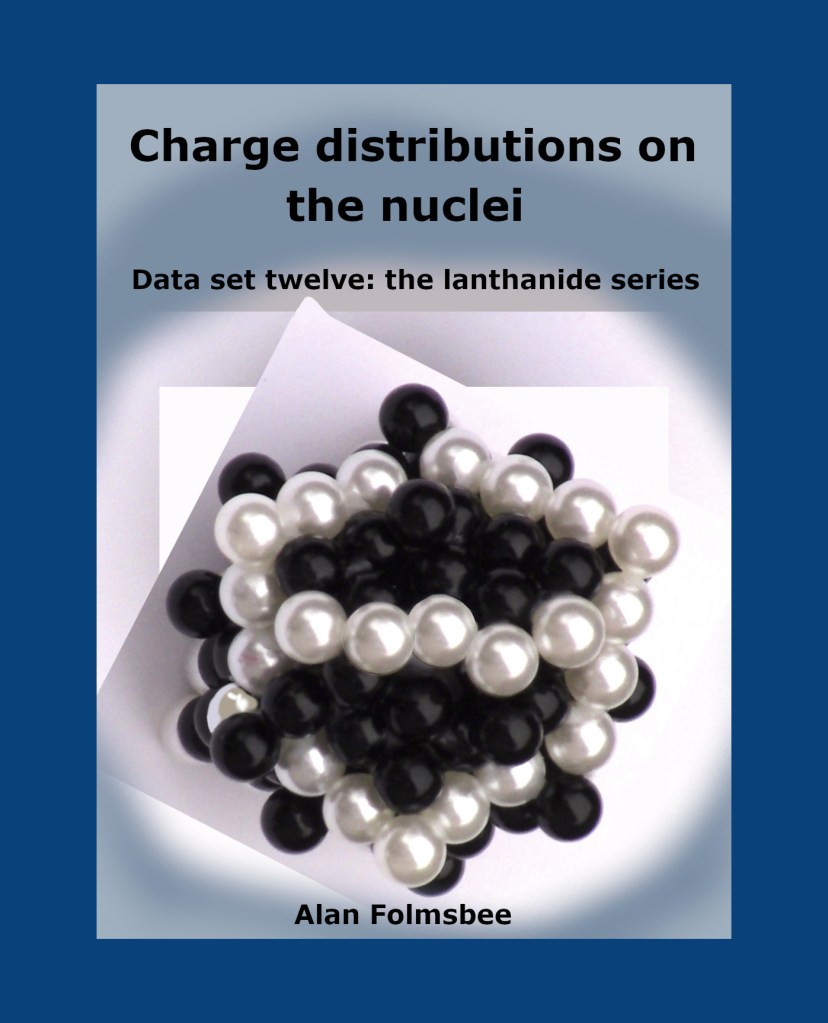
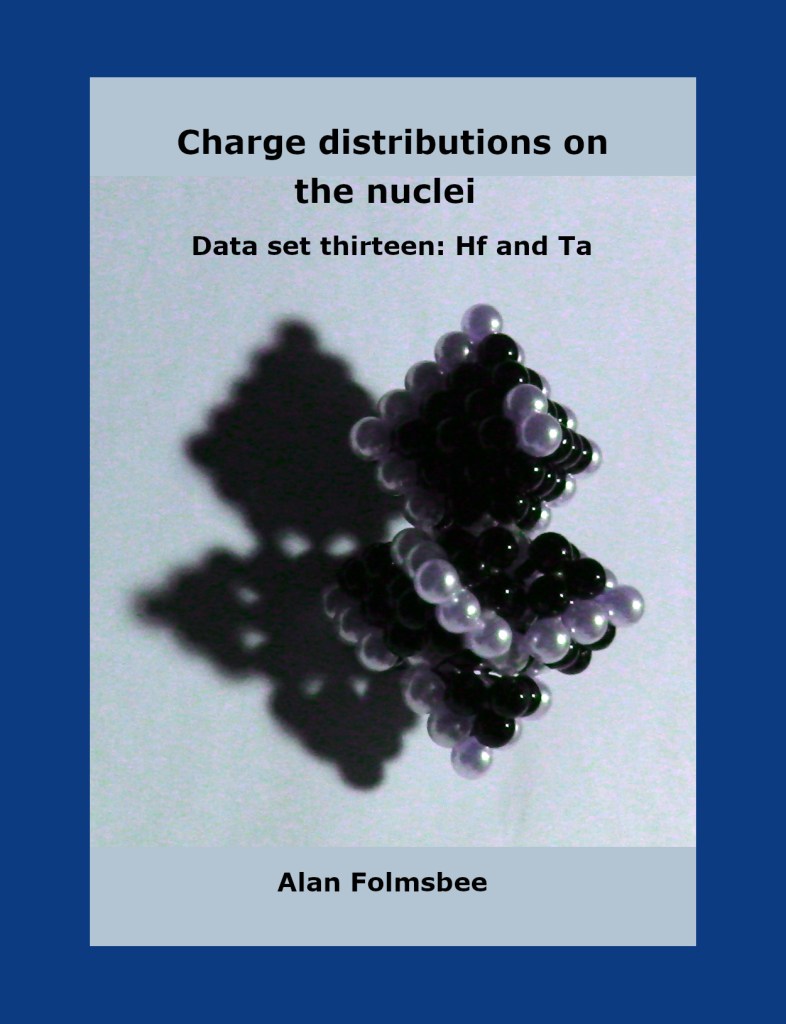
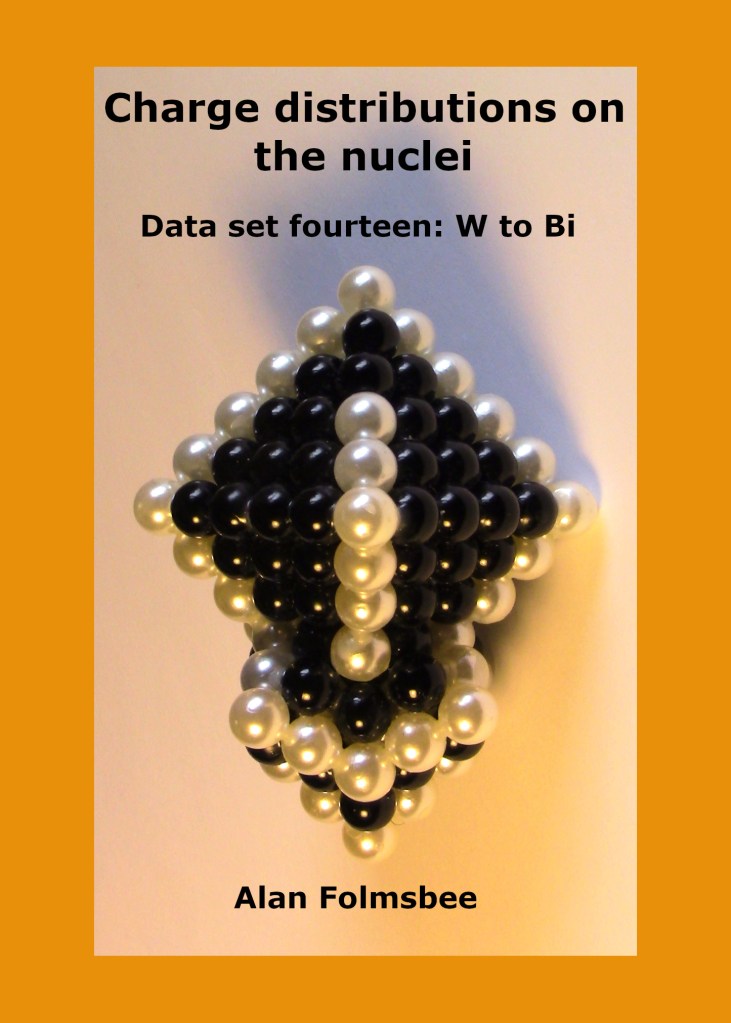
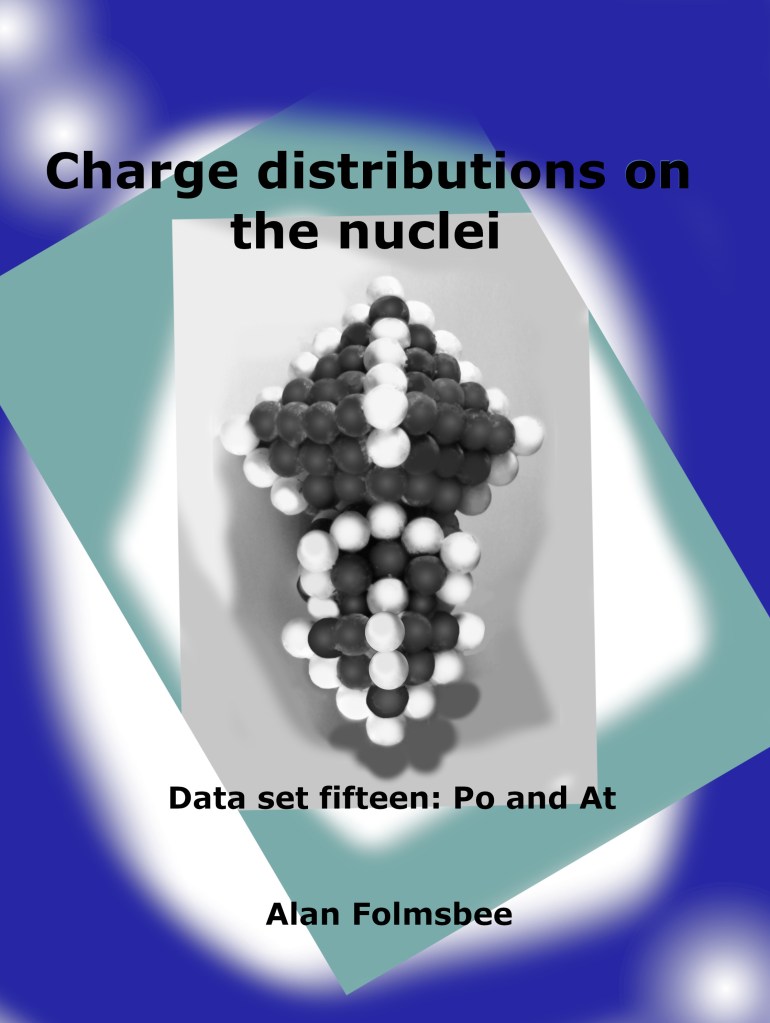
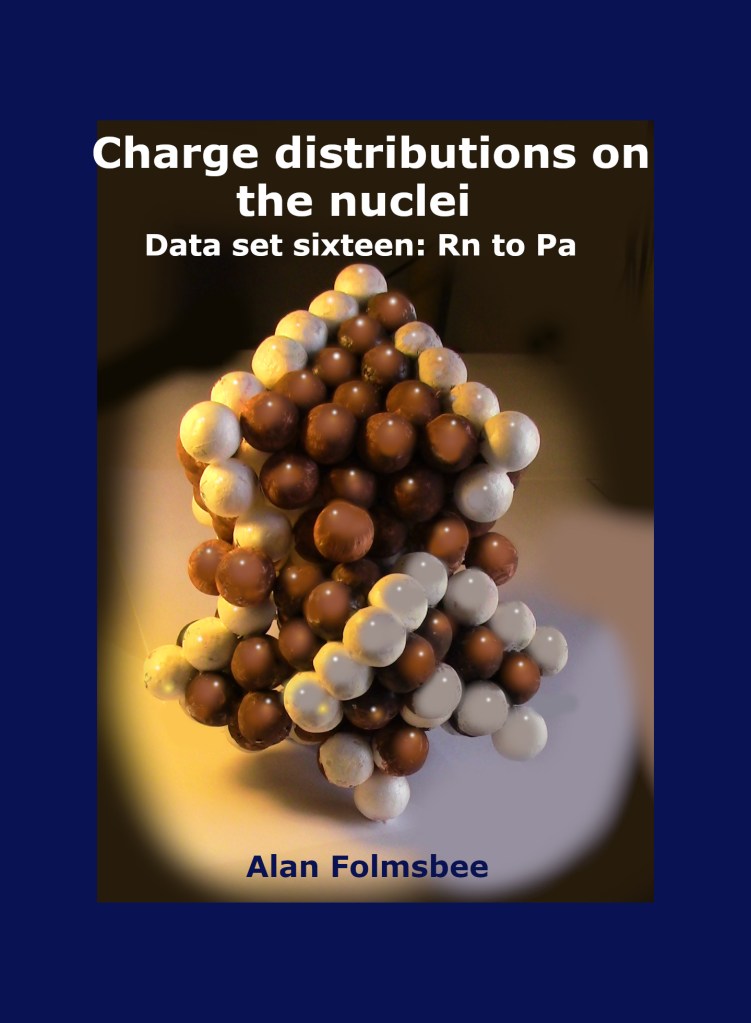
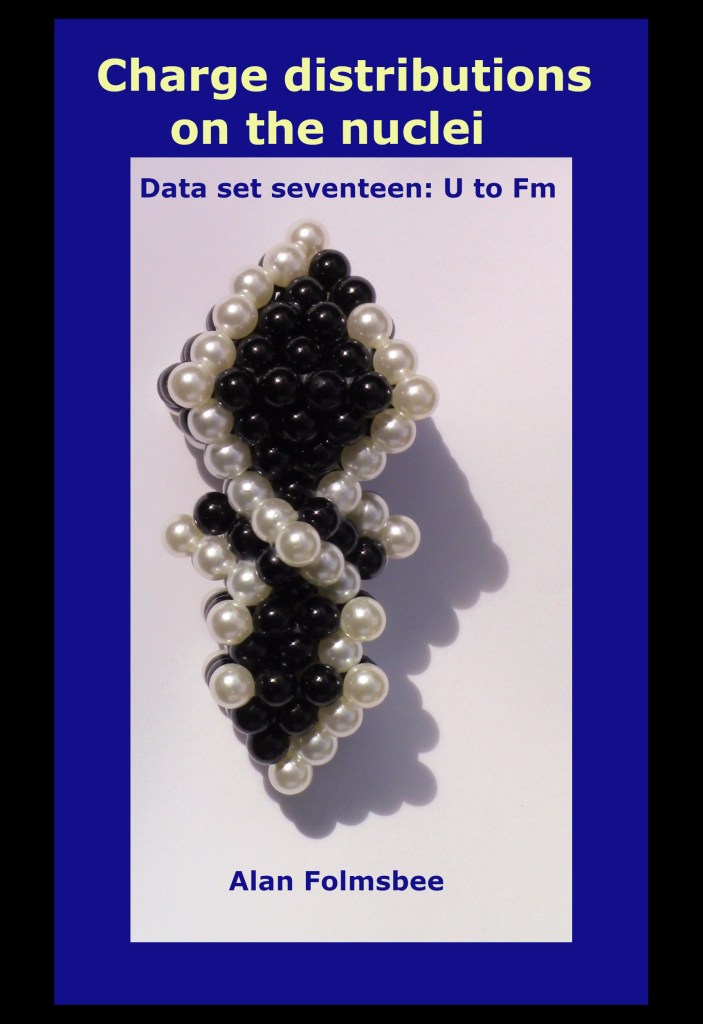
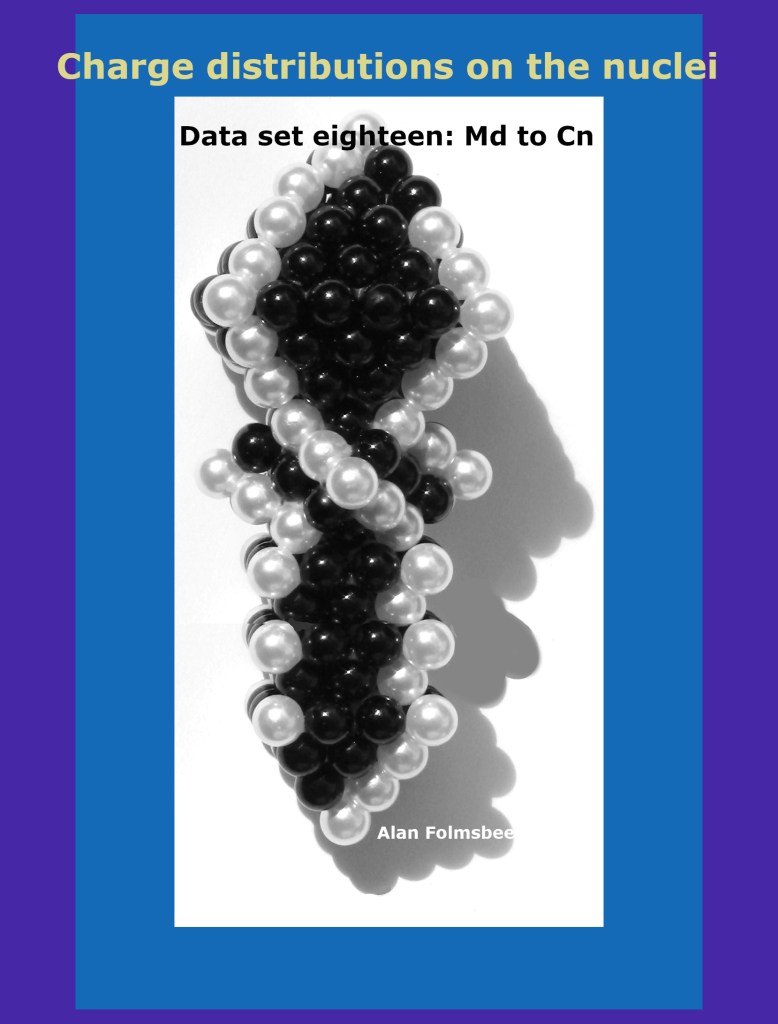
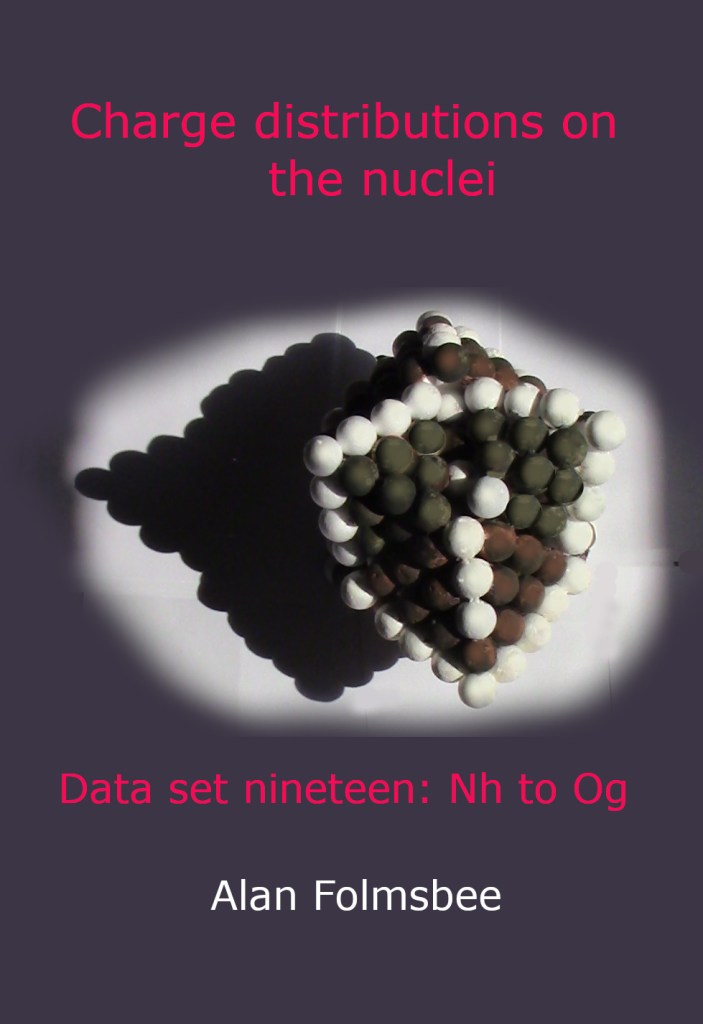
A new Law of Physics is seen in the images of nuclear models: protons form lines of protons commonly in stable isotopes of most chemical elements.
February 15, 2024
December 22, 2024: my gravity idea page shows spacetime curvature in scale drawings.
(not approved by educators)
 Nuclear Theory Data
Leave a comment